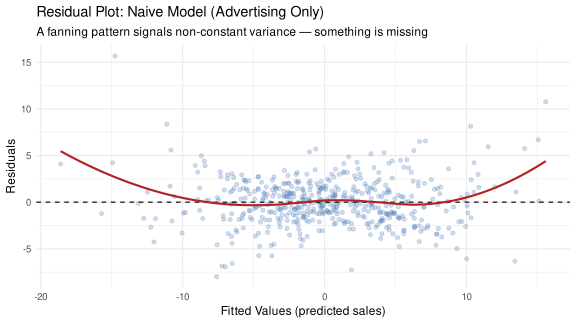
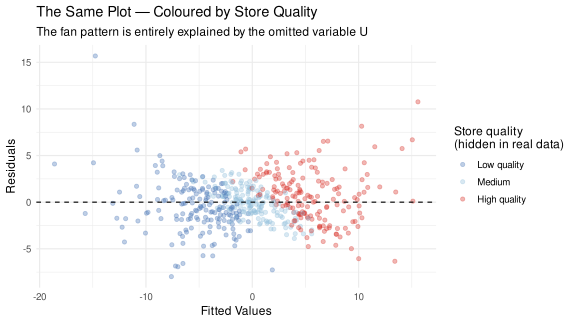
The residuals spread out dramatically as fitted values increase. This heteroskedasticity is a red flag: non-constant variance suggests the model has left out something that also varies with X.
Here, the missing variable is store quality. High-advertising stores tend to be premium stores, and premium stores have far more variable sales (luxury flagships have big swings; budget stores are consistently mediocre). The fan shape is consistent with that missing variable — but heteroskedasticity can also arise from non-linearity, measurement error, or genuine outcome heterogeneity. In real data, a fan pattern is a prompt to investigate further, not a direct diagnosis of OVB.
Connect this back to Case 1: just as the GPI scale was picking up Environmental Concern alongside purchase intention, our sales variable here is picking up store quality alongside advertising effectiveness. The residual plot is doing the job that HTMT and DVI did in Case 1 — telling you that Y reflects more than X.